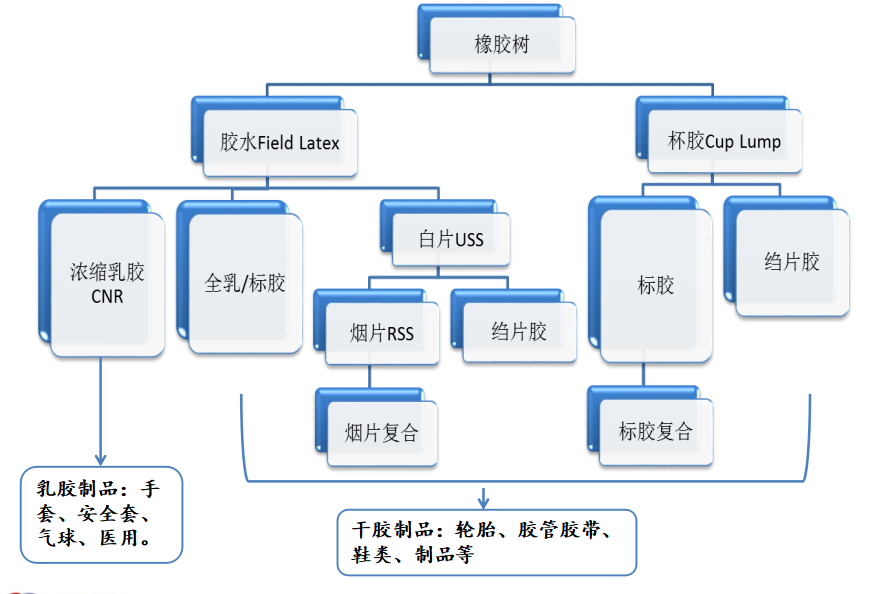
The latex silk commonly referred to as rubber silk belongs to natural rubber and is derived from the sap of rubber trees. They are extremely precious because each rubber tree can only produce 30 milliliters of latex juice per day. A latex product takes at least one to one and a half days to complete, which is a time-consuming and precious material product. During post production, latex is used as the main raw material, along with other industrial materials such as titanium dioxide, zinc oxide, sulfur, and so on, totaling more than twenty types. Then mix and homogenize before loading into the tank; The surface is smooth and the cross-sectional shape is obtained by extrusion method through filtration. After extrusion, it needs to be directly introduced into water containing a certain proportion of acetic acid, and the acetic acid is removed after passing through water at a certain temperature. After the water is discharged, it needs to be dried and desulfurized, and then compressed into strips according to the desired width
Place of Origin
Although there are over 2000 plants in the world that can produce natural rubber, the main one widely promoted for cultivation is the Brazilian rubber tree. The Brazilian rubber tree is native to the western region of Mount Mara in the Amazon River basin of Brazil. The rubber tree prefers high temperatures, high humidity, calm winds, and fertile soil, and is mainly planted in low latitude regions such as Southeast Asia. It has now been distributed to more than 40 countries and regions in Asia, Africa, Oceania, and Latin America. Countries with large planting areas include Indonesia, Thailand, Malaysia, China, India, Vietnam, Nigeria, Brazil, Sri Lanka, Liberia, etc. Due to natural conditions, China's rubber planting areas are mainly distributed in Hainan, Guangdong, Guangxi, Fujian, and Yunnan. In addition, Taiwan can also be planted, with Hainan being the main rubber planting area, with a usable area of about 15 million acres. Currently, about 14 million acres have been planted, with an annual output of about 600000 tons.
characteristics
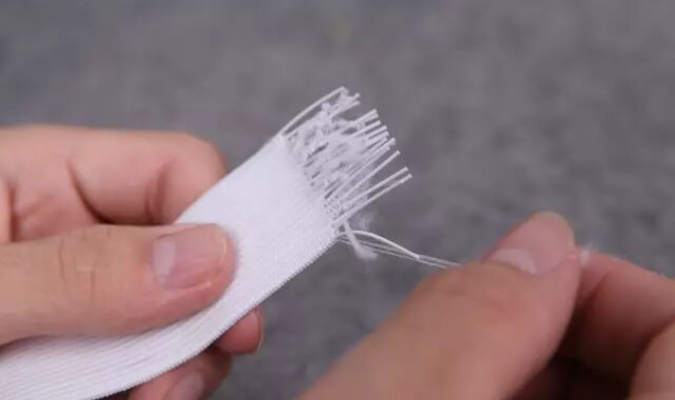
1. Advantages: Latex silk, as a natural rubber, is mainly composed of cis polyisoprene, which has excellent elasticity, insulation, water resistance, plasticity, high tensile strength, good tear resistance and wear resistance, and is easy to bond with other materials. After appropriate treatment, it also has valuable properties such as oil resistance, acid resistance, alkali resistance, heat resistance, cold resistance, pressure resistance, and wear resistance. Therefore, it has a wide range of applications, excellent elasticity, and no deformation,
2. Disadvantages: It is prone to aging in air, becomes sticky when exposed to heat, expands and dissolves easily in mineral oil or gasoline, and is resistant to alkali but not strong acid
3. Aging manifestations: manifested as cracking, stickiness, hardening, softening, powdering, discoloration, mold growth, etc. Among them, the most obvious disadvantage is the susceptibility to aging in hot air, known as thermal oxygen aging. For example, taking samples from natural rubber products and aging them in an aging test chamber at a temperature of 150 degrees Celsius for one day, it is observed that they are prone to brittle fracture after aging.
4. Shelf life of latex silk: The shelf life of latex silk is related to the refining process. Generally, the shelf life of latex silk produced in Southeast Asia can be stored for 6-9 months under suitable storage conditions (dry, dark) and low temperature (below 20 degrees Celsius). Hainan glue takes about 4 months. The shelf life of synthetic rubber varies depending on the variety, ranging from 12 to 18 months. The key is still the storage conditions. So we also need to pay attention to the first in, first out policy when selling goods here
Usage
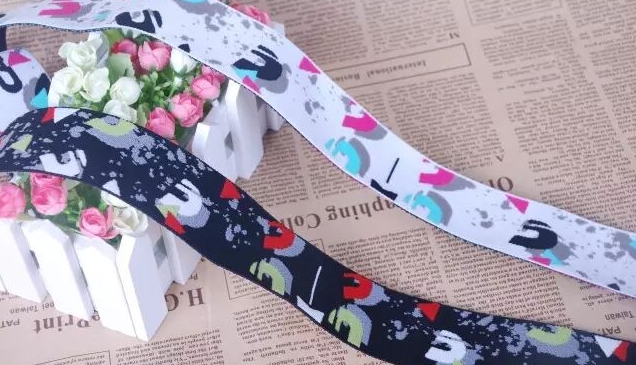
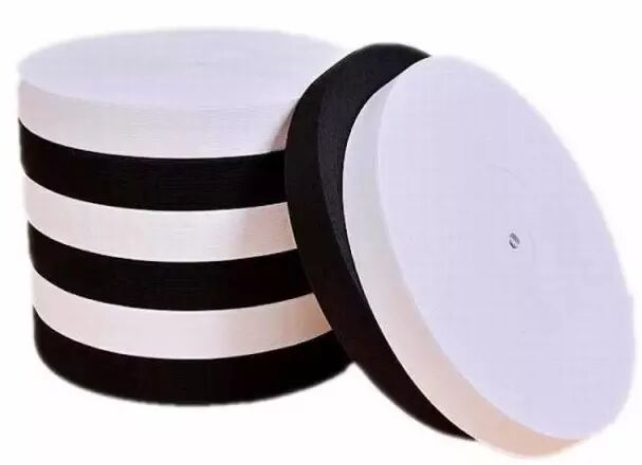
Latex silk has a wide range of applications. For example, elastic fabrics used in daily life, such as various elastic bands, tight underwear, swimwear, sock cuffs, glove cuffs, waist belts, underwear shoulder straps, etc. Rubber pattern band, rubber band, elastic band, sofa elastic band, yarn wrapped yarn (covering yarn), tourniquet, lining band, industrial vulcanized rubber sheet, fitness band, diving mirror band, sports and fitness equipment, medical and health products, bandages, various elastic fabrics, non-woven products, hair accessory headband, sofa elastic band, gold and silver thread, woven socks, suitable for flat elastic bands and round rope bands woven by high-speed machines and horse riding machines.