Duke University Stephen L. Craig& Michael Rubinstein expressed the following insights:
Natural rubber is characterized by the interactions between its polymer chains; Crosslinking” And it has elasticity and is widely used in multiple industries. But rubber is prone to cracking and fatigue. Now, studies have shown that reducing crosslinking density in highly entangled natural rubber can improve its crack resistance and extend its service life.
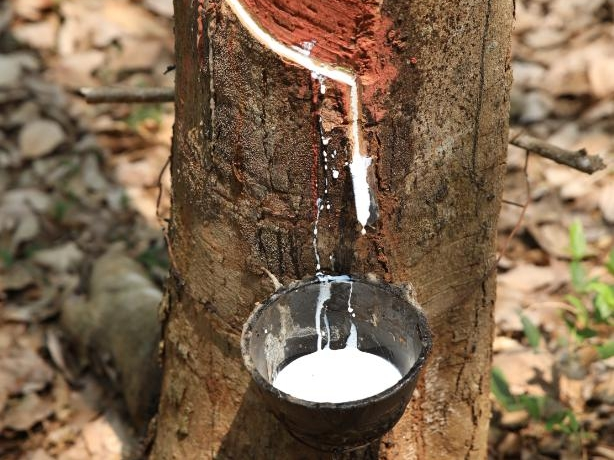
Christopher· A little-known discovery made by Columbus during his exploration of the Americas was natural rubber, also known as; Latex” It has been used by Native Americans for centuries to make balls and boots. Later, Charles; McIntosh used natural rubber to make a raincoat named after him. But early products had fundamental limitations because natural rubber is not a solid, but a thick liquid: as long as the time is long enough, the rubber will flow and lose its original shape. In the 19th century, Charles; Goodyear discovered the vulcanization method, which turns natural rubber into a solid material, with an annual output of 15 million tons, widely used in transportation, medical, and consumer goods fields. However, natural rubber products are still prone to cracking. Nian et al. in 'Nature'; Sustainability "reported a method that increased the toughness and fatigue threshold of natural rubber tenfold.
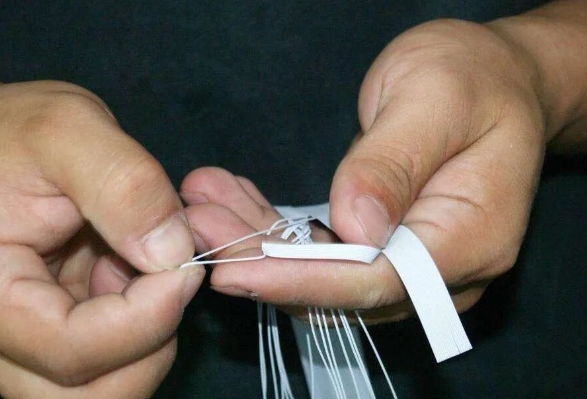
IFrame natural rubber is composed of very long and soft polymer molecules, and is a viscoelastic liquid. Over time, these long molecules slide against each other, causing the material to lose its shape, but in the short term, these molecules do not move away from each other, resulting in the material exhibiting elasticity. This liquid; The source of solid mixing behavior lies in the highly entangled polymer chains, where the movement of each chain is severely restricted by its neighbors and can only diffuse slowly.
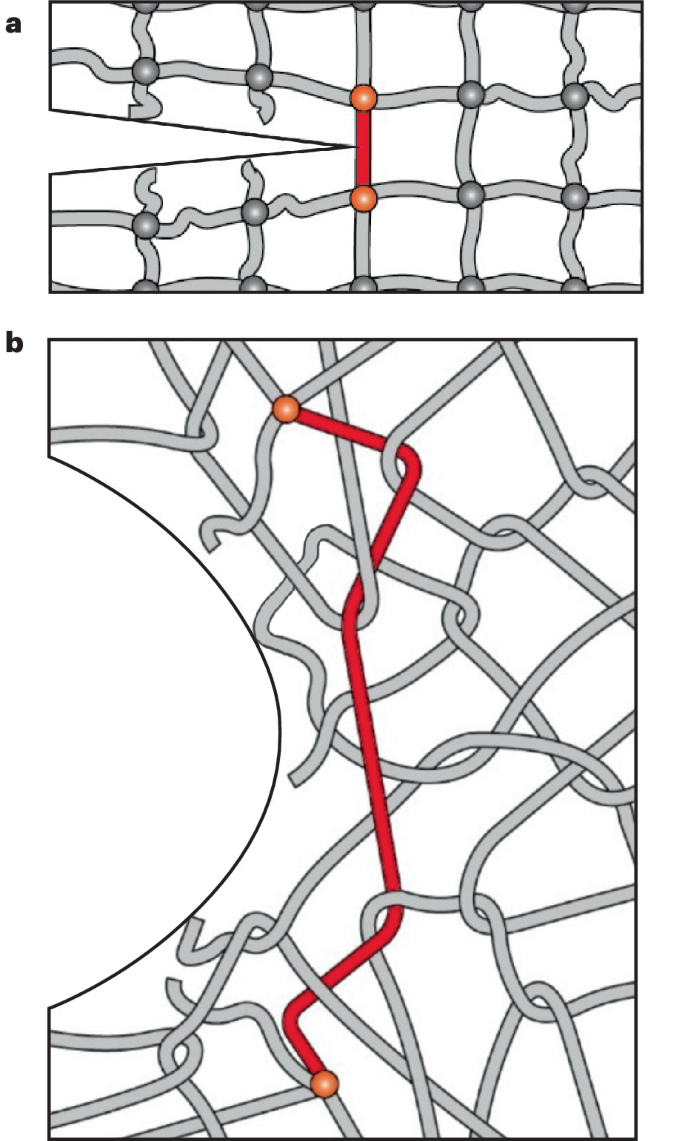
Goodyear discovered that when natural rubber is mixed with sulfur and heated (vulcanized), it becomes an elastic solid. This process forms cross-linking bonds between polymer molecules, preventing their flow and establishing a permanent structure resembling a three-dimensional fishing net. But polymer segments still have flexibility, so rubber has elasticity. In a typical vulcanization process, the number of crosslinks is equivalent to the number of entanglements.
In addition, for ease of processing, natural rubber usually requires“ Plastering” — — Cut it into shorter chains and reduce viscosity through mechanical shearing. Therefore, the final formed vulcanized rubber network is composed of short chain segments that are no longer strongly entangled. Although these segments are soft and the material has elasticity, some segments are shorter than others and have longer distances between crosslinking points due to random crosslinking. When rubber is stretched, these short and fragile segments are prone to excessive stretching and breakage, leading to the formation of cracks and shortening the service life.
In order to improve the fracture resistance and toughness of vulcanized rubber, Nian et al. borrowed a strategy proposed in recent years in the polymer gel: by increasing the length of the chain segment between the cross-linking points, the number of entanglements on each chain increased by about ten times. In order to maintain network connectivity, multiple crosslinks still need to be formed on each main chain. Therefore, in order to lengthen the chain segment, it is necessary to retain a longer polymer backbone. Therefore, researchers have decided to avoid using traditional high-strength plasticizing methods to reduce chain length damage.
Even at lower crosslinking densities, researchers have achieved multiple crosslinking points per chain, with longer entangled segments between crosslinks. The elastic modulus of this rubber is mainly controlled by entanglement. When the cross-linking distance is far and there is continuous entanglement in the middle, it can effectively suppress the formation of cracks caused by short chain segment breakage. This allows the new rubber to withstand greater levels of stretching.
In the highly entangled natural rubber synthesized by Nian et al., some segments of IFrame are stretched and some are compressed. But unlike cross-linking, entanglement allows chains to slide within it, more like loops than knots. This redistribution of entanglement along the chain segment helps balance tension, reduces the possibility of excessive stretching of the chain segment, and thus suppresses the generation and propagation of cracks. This method increases material toughness by ten times and fatigue threshold by five times.
Of course, there are still many properties of this highly entangled rubber that urgently need further research. For example, cross-linking reduces the impact on the adhesive dissipation performance of rubber, which is particularly critical in products such as tires. In addition, it is necessary to investigate the effects of various additives such as fillers, pigments, and antioxidants on toughness enhancement. But if this achievement is successfully applied to commercial rubber, it will have a huge impact. For example, if the speed of tire tread wear can be reduced tenfold, it will not only reduce replacement frequency and improve safety, but also significantly reduce the 6 million tons of rubber microplastics released annually due to tire wear.
It is worth noting that Nian et al. weakened two key steps in natural rubber processing -; — Intense plasticization and excessive cross-linking between chains; — These advanced polymer properties have been achieved. No matter in which products this will appear in the future; Entanglement Engineering; The basic principles proposed by the team will provide insights for future material design strategies